June 2026
Kailali • Kapilvastu • Rupandehi • Chitwan
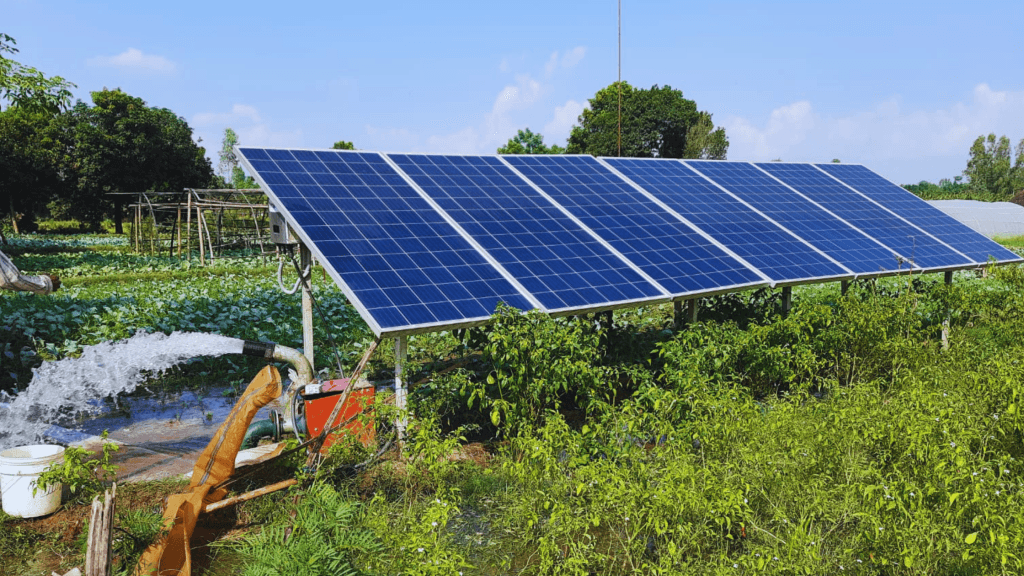
Kalpavriksha Group has successfully completed all three phases of the Solar Water Pump (SWP) Project, implemented with the financial and technical support of Electriciens sans frontières (ESF).
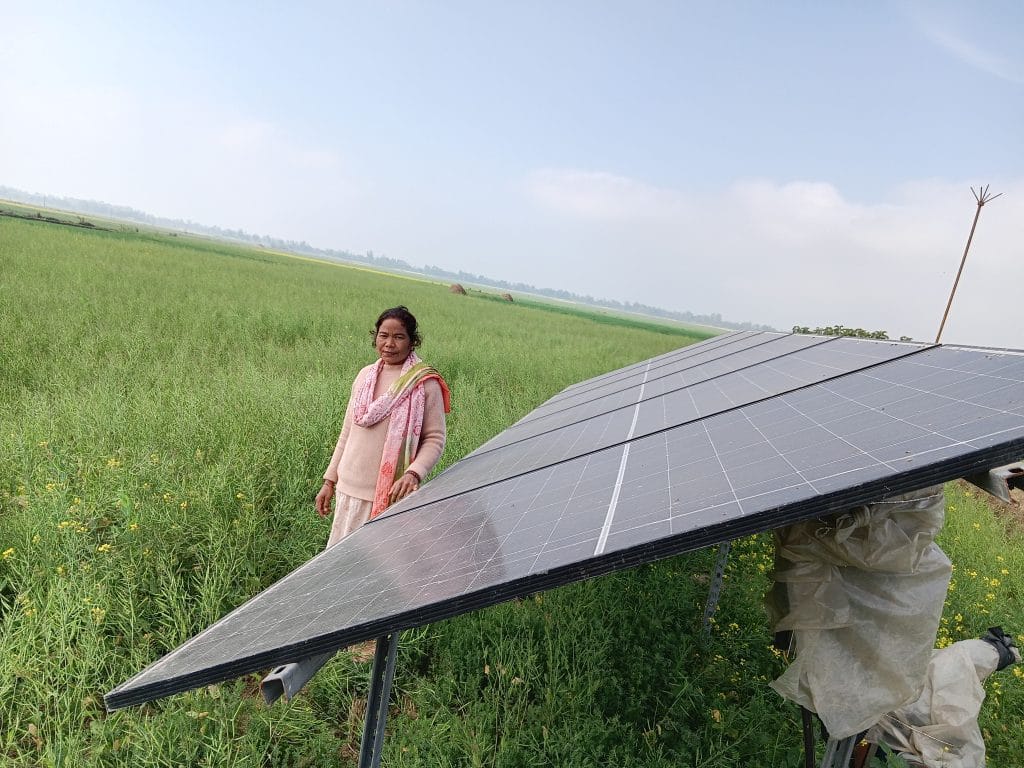
The two-year initiative introduced solar-powered irrigation systems to farming communities across Kailali, Kapilvastu, Rupandehi, and Chitwan, demonstrating how renewable energy can strengthen climate-resilient agriculture and improve rural livelihoods.
Systems Installed: 15 Solar water pump systems
Direct Beneficiaries: 281 Households and farmer groups
Women Engaged: 300 Women entrepreneurs mobilized
District Coverage: 4 Districts across Nepal
The project directly benefited 281 farming households and mobilized 300 women entrepreneurs who played a key role in community awareness, farmer engagement, and promoting clean energy technologies. All 15 installed systems are currently operating successfully. The project was implemented across four districts: Kailali, Kapilvastu, Rupandehi (Butwal), and Chitwan. Key impact highlights include:
- Reliable year-round irrigation access
- Reduced dependence on diesel fuel and unreliable electricity
- Lower irrigation operating costs
- Improved crop productivity and farm income
- Greater participation of women in agricultural decision-making
- Stronger climate resilience for farming communities
Partnerships that made the project possible:
A major strength of the initiative was collaboration with local organizations.
Sahas Nepal supported engagement with 72 women farmers, leading to solar water pump installations in four women-led farmer groups. Rural Reconstruction Nepal (RRN) facilitated installations in two farmer groups from its network of 105 women farmer groups.
These partnerships helped extend access to solar irrigation technology to economically disadvantaged and women-led communities that would otherwise have faced significant affordability barriers.
Evidence for future scale-up
One of the most important outcomes of the project was the evidence generated from testing 70%, 50%, and 30% subsidy models.
The implementation experience showed that a 50% subsidy model provides the strongest balance between affordability, farmer ownership, and long-term sustainability. Farmers who contributed 50% of the investment demonstrated stronger maintenance practices, greater responsibility for the systems, and higher long-term commitment.
Looking ahead
Building on the success of this initiative, Kalpavriksha Group plans to expand solar-powered irrigation to additional underserved farming communities across Nepal. The organization aims to install 25–30 additional solar water pump systems in the next phase while strengthening partnerships with local governments, NGOs, and women farmer groups.
We extend our sincere gratitude to Electriciens sans frontières (ESF), Gham Power Nepal, Sahas Nepal, Rural Reconstruction Nepal (RRN), local governments, women entrepreneurs, and farming communities whose collaboration made this project possible.
Together, we are building a more resilient, inclusive, and sustainable agricultural future for Nepal.