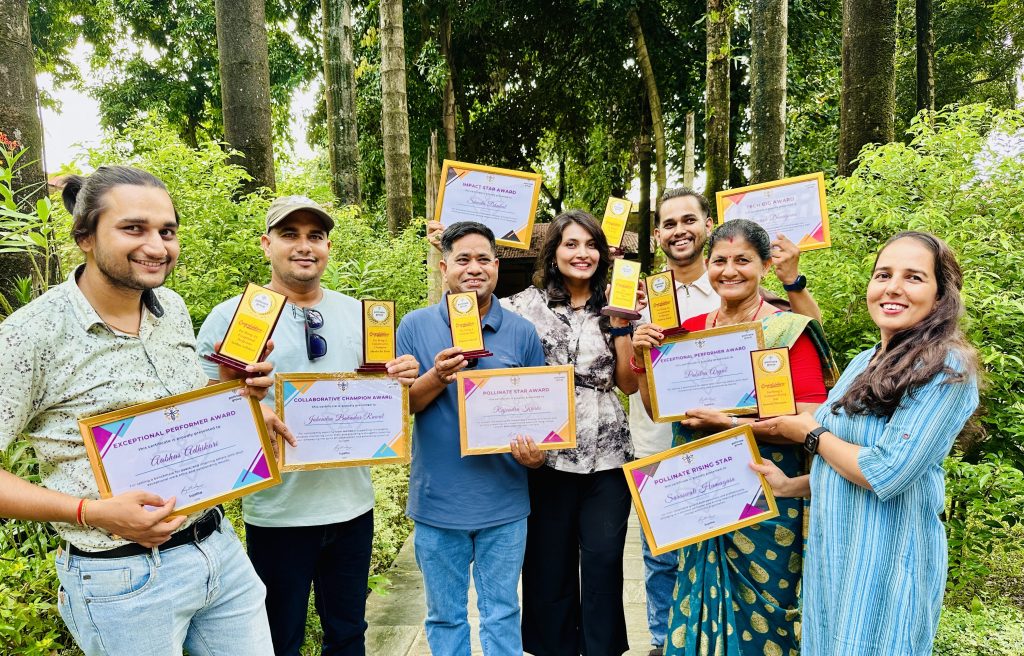
In the villages of Chitwan and beyond, a quiet shift is taking place. Women who once depended entirely on a husband’s income, a father’s permission, or a season’s harvest are now running their own businesses, selling handwoven textiles, packaged foods, and handicrafts to customers they will never meet in person, in cities across Nepal and, increasingly, the world.
This is not a trend that arrived overnight. It is the result of more than a decade of patient, local work.
Why Rural Nepal Needed a Different Approach
Rural Nepal presents entrepreneurs with a particular set of obstacles. Access to formal banking is limited. Markets are often hours away by road. Many women have never been taught how to price a product, manage cash flow, or negotiate with a buyer — not because they lack the skill to learn, but because no one ever sat down and taught them.
Traditional aid models often miss this gap entirely. Handouts solve a problem for a week. They rarely solve it for a lifetime. What rural women entrepreneurs in Nepal have needed is not charity, but a structured path: training, mentorship, and a door into markets that were previously closed to them.
Secure: Building the Foundation
For a first-time entrepreneur, the hardest step is always the first one. The Secure phase focuses on exactly that — foundational business training, leadership coaching, and a full year of one-on-one mentorship. This is where a woman with a skill, but no roadmap, learns how to turn that skill into a functioning business: how to price a product fairly, manage a small budget, and build the confidence to make decisions independently.
This stage matters because confidence, in entrepreneurship, is not a soft skill. It’s the difference between a woman who quietly stops selling after her first slow month and one who adjusts her approach and keeps going.
Succeed: Reaching Beyond the Village
A business that only sells to its immediate neighbors has a ceiling. The Succeed phase exists to remove that ceiling. Through a dedicated marketplace, women-led businesses gain a proper storefront, consistent branding, and the logistics support needed to reach buyers across Nepal, the Nepali diaspora, and international markets.
This is often the turning point where a side income becomes a real livelihood — where a woman who once sold a few scarves at a local market finds her products reaching a customer in Kathmandu, or further still.
Share: Multiplying the Impact
The final phase, Share, recognizes something important: knowledge that stays in one place has limited value. Through training programs and fellowships, established entrepreneurs mentor newer ones, and students gain hands-on research experience by working directly within a live network of women-led businesses.
The Numbers Behind the Model
After more than fifteen years of grassroots work in Nepal, the impact of this approach is measurable. The majority of women supported through this model report a marked increase in confidence managing their own finances and making independent business decisions. A significant share now play a leading role in major household decisions — a shift that ripples outward into their families and communities. Many partner households also report meaningful savings in both cost and time, the kind of practical, daily-life impact that rarely makes headlines but changes how a family lives.
Why This Matters Beyond Nepal
Rural women’s entrepreneurship is not a niche issue. It sits at the intersection of economic development, gender equity, and community resilience. When a woman in rural Chitwan gains the tools to run her own business, the effects are rarely contained to her alone — they extend to her children’s education, her household’s financial stability, and her standing within her community.
What makes the Secure, Succeed, Share model distinct is its patience. It does not promise instant transformation. It builds, step by step, toward something durable: a business that can survive a slow season, a market shift, or a personal setback — because the woman running it has been given the tools to adapt, not just a one-time boost.
Looking Ahead
As Kalpavriksha Group continues this work across Nepal, the goal remains the same as it was at the very beginning: a Nepal where any woman can build a business, earn independently, and become someone her community looks up to. Rural Nepal does not lack ambition or talent. It has, for too long, lacked the structured path to turn both into something lasting. That is the gap this model exists to close.